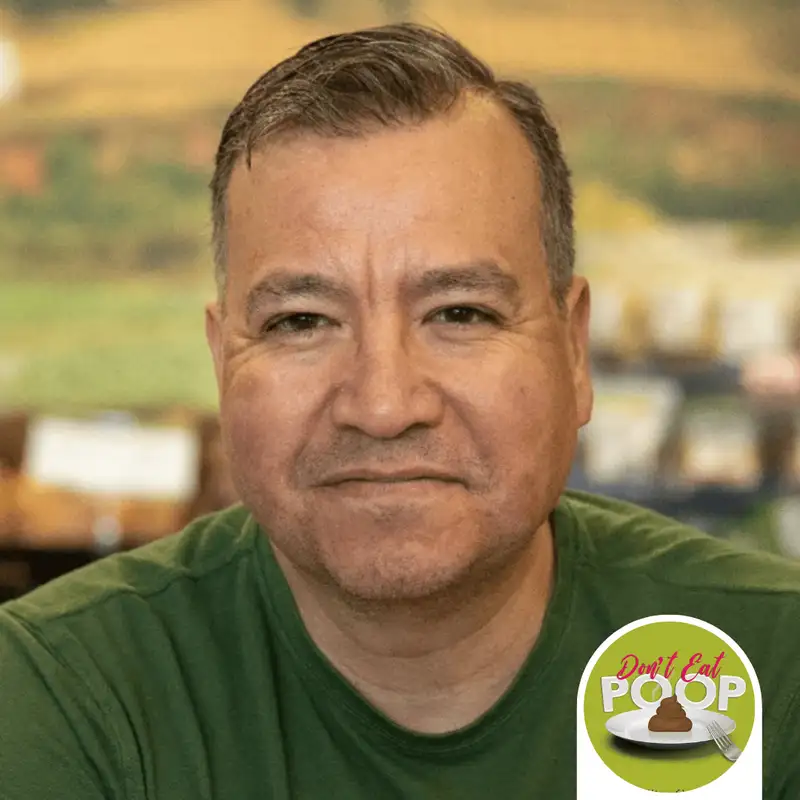
Produce Safety Starts with Creating a Culture of Food Safety with Humberto Maldonado from Organically Grown Co. | Episode 150
DEP E150(3)
===
Humberto Maldonado: [00:00:00] People start listening about green onions from Mexico being contaminated. They didn't want to purchase green onions, but on not only green onions, but other kind of onions that was really messy with the media. Yeah.
Francine L Shaw: I feel like I'm having a full circle moment here, so I live about two hours from where that outbreak had full impact.
And there were people lined up waiting for the vaccine. And many years later, I drove past that restaurant. It had shut down and it was so stigmatized that it was still sitting there empty with all the weeds grown up, and just nobody would even buy the building because it was just so stigmatized. And when I say years later, talking a couple decades, so.
When people think about food safety, that things don't matter. [00:01:00] This happened.
intro: Everybody's gotta eat. And nobody likes getting sick. That's why heroes toil into shadows, keeping your food safe at all points from the supply chain to the point of sale. Join industry veterans, Francine l Shaw and Matt Regus for a deep dive into food safety and all wars. Down to one golden rule. Don't eat poop.
Don't eat poop.
Matt Regusci: Okay. So we have where Francine and I are here at the Food Safety Consortium again, this is our third year. This is awesome. And we have a special guest with us. Humberto, how are you? Good, thank you. Good. And we've known each other for a while and same type of kind of career you started in.
You mainly work in produce, correct? Correct. How long have you been doing that? Why don't you tell [00:02:00] us a little bit about yourself? Humberto.
Humberto Maldonado: Of course, I have been in produce a little more than 20 years. I start working for the Mexican government in the area of produce safety. I was there for two years. My first experience there actually a couple of months after starting was with the green onions and hepatitis outbreak, and then I moved to Driscoll's.
I was the first food safety person in Mexico. And I stayed there for 11 years. My last position was as Director of Food Safety for Mexico and Latin America. Then I started my own company where I was a trainer and consultant for food safety and compliance, including organic certification and labor standards for about five or six years.
And then COVID happened and I got back to the industry with Organically Grown Company. Where I have been leading the food safety, organic integrity, [00:03:00] and environmental health as and safety programs, I have been there for four years.
Matt Regusci: Yeah. I remember working with you through Keith Schneider, at Driscoll's.
You were running basically Mexico for Driscoll's, right? For food safety?
Humberto Maldonado: Mexico and Latin America.
Matt Regusci: Latin America, yeah.
Humberto Maldonado: Yes.
Matt Regusci: Yeah, that was so much fun. Maybe not for you with some of the stuff that.
Humberto Maldonado: It was fun actually, and.
Matt Regusci: No, no, with dealing with me.
Francine L Shaw: Perspective here. Matt was an auditor.
Matt Regusci: No, Matt was running the auditing company. I wasn't the auditor.
Francine L Shaw: Okay. Okay. But two different perspectives here.
Matt Regusci: So. We love all the different cultures in Latin America and, but as an American, sometimes I can be American-centric and I just think, oh. Everybody from Latin America just gets along with everybody from Latin America. And we had a bunch of Chilean auditors.
Do you remember this?
Humberto Maldonado: Yes, of course.
Matt Regusci: And I was like, they speak Spanish, they will be perfectly fine going to Mexico.
Humberto Maldonado: Well, they speak Chilean. [00:04:00]
Matt Regusci: I didn't talk about this story beforehand 'cause I wanted you to know, like, I'm completely honest with this podcast, but I, so we sent Chileans over to do Humberto's audits in Mexico.
And Humberto is, they don't know what they're doing. These auditors are brand new, which they were brand new. And so I was using them for Driscoll's to learn because Driscoll's is the best program in one of the best programs in food safety in the field. And so I was sending them to Mexico to learn and Humberto is like, they don't know anything.
I'm having to train all these people and they don't even speak Spanish.
Francine L Shaw: Can we step back a second? You didn't know they spoke a different language?
Matt Regusci: No, I knew they spoke a different. I, I knew they spoke a different dialect, but they speak Spanish. They speak.
Humberto Maldonado: They speak Spanish. It's just that Chileans and Mexicans use different words.
Francine L Shaw: There are multiple dialects of Spanish, like several different dialects of Spanish. Correct?
Humberto Maldonado: It's not really about dialects, but expressions, some terms that are used differently. It's different. Yes. And for example, we use the [00:05:00] word for farms. We talk about rancho, campo and they use the word fundo.
Francine L Shaw: So I know when we're translating.
For like exams and stuff, we have to be very careful because there are so many different words. It means so many different things depending on where it's.
Humberto Maldonado: Where you are
Francine L Shaw: and where it's going.
Humberto Maldonado: Yes.
Matt Regusci: Yeah. So it was funny. So coming from the food safety certification side, running the company and working with people like, Humberto, who's been in the industry forever, used to work in the government. I like to send some of the newer people to people like Humberto, but I understand that's not always a fun experience. You might say. You see the look on his face and he is like, yeah.
Humberto Maldonado: Driscoll's has been very, always, very open to train others and be a field for training others.
We actually were the me, Driscoll's Mexico. We had the first Primus GFS certifications. Yes. For [00:06:00] example, we were Primus Azzule's, Primus G trial for Primus GFS. The issue was not having too many new auditors at the same time, but because that create chaos, and at that time when we were working with the Primus standard, it was about a thousand audits happening.
Yes. During the season. And we were dealing with the corrective actions and all that stuff. And also calibrating a number of auditors was difficult. Yes.
Matt Regusci: Yeah, yeah. Yeah. And that's the interesting thing, like when we talk about farm audits, everybody thinks, oh yeah, it's, there's a farmer and we go audit them.
But like when you're working with a company like Driscoll's, it's Driscoll's with a thousand farmers, and it's the Driscoll's program and the farmers, each of them are independently implementing Driscoll's program and the auditor is going and auditing each of those different farmer's versions [00:07:00] of implementing Driscoll's program.
So we try to calibrate auditors in terms of, because you can't have one auditor performing a thousand audits. It's impossible. The other thing too is I convinced Driscoll's to move from Primus GFS, which I helped co-found to GLOBALG.A.P.. That was another thing Humberto had to do in Mexico was, but Mexico already does a lot of GLOBALG.A.P. though too, so.
But the hard thing I remember for you was the chemicals because the registration in Mexico is a very different process than the United States. And then the chemical companies have a hard time getting certain chemicals for strawberries registered for Mexico. Right. And so you had to deal with that whole entire thing.
Humberto Maldonado: Of course. And it was a nightmare.
I was in the middle of a conference when my manager Kid, who was the director of food safety for Driscoll's, called me because all our GLOBALG.A.P.s certifications were canceled because of the pesticide register issue, [00:08:00] and that was a big deal for accessing the European market. I also was a big supporter of moving from Primus. For a time we were performing both Primus GFS and GLOBALG.A.P., and I was a big supporter of moving into only one scheme and supporting the idea of having GLOBALG.A.P.
So. That was a big thing, but I have always been committed with food safety. I have worked with companies that are very committed to food safety, including Driscoll's, and we start working with the pesticides companies and the government to find a way to solve that.
I actually went to the NAFTA technical working group for pesticides to expose the situation that we were having at Mexico. At that time, the pesticides companies didn't want to look into the house because berries were a minor crop and they weren't interested [00:09:00] in that market. So we worked with the Mexican government to find a way to facilitate things and working together with other berry companies.
We went through the process of having, paying some of the studies that are required for registration and finding the way to go through that process in a way that helped to use existing toxicity studies that were the most expensive to have new registers, and that was a work that we made for a long time, working with the pesticide associations in Mexico, UMFFAAC at that time, and lobbying with them.
Right now, it's not that big issue because berries are now a very interesting crop from a economic perspective for them. So now they are looking for the various companies to have their products being registered.
Matt Regusci: We're talking about this [00:10:00] too, just let everybody know we're talking about pesticides that are completely legal and put completely safe, and they're utilized a lot in the United States, but in order to use them in other countries, you have to register those pesticides in each of those countries, and every single country has a different way of doing it.
A lot of times it's very bureaucratic and expensive for the chemical companies to register them. And so Driscoll's had to figure out a way to do that. And it was, it was a process. It was a process.
But, okay. So you started your career, and I didn't realize this until you just said this, you started your career with the hepatitis in green onions in for the government?
Humberto Maldonado: Yes. I participated in inspecting some of these companies in reviewing the information that they were sending to FDA.
Matt Regusci: So tell the audience a little bit about what happened. 'cause this was in the nineties, right?
Humberto Maldonado: It was in 2003.
Matt Regusci: 2003.
Humberto Maldonado: November, 2003.
Matt Regusci: Right? 2000.
Humberto Maldonado: I remember because when I heard, when I see that in the [00:11:00] newspaper, I was in my honeymoon and I was thinking this is going to be an issue when I got back to work.
Matt Regusci: And so it was dirty diapers, right? Or what was the reason that the hepatitis kind of got to a systemic issue? In the green onions.
Humberto Maldonado: There are theories. We are not very sure what was the root cause, but we think it was actually water.
Matt Regusci: Yeah. Yes. So it was water. And then what type of, so just for the audience here, so there was a big green onion outbreak.
In 2003 with hepatitis, got a lot of people sick and it was a systemic issue. So that's why you're thinking it was probably the water, right? Because it was through the whole thing.
Humberto Maldonado: Yeah, it was systemic. It involved only four companies, but it shut down the entire green onions market for Mexico at the time when the market was in the important window for green onions.
So the workers, the companies. Where [00:12:00] from one day to another stop harvesting, stop sending product to the US because of those four companies that was sold very quickly because the other companies showed that they had good traceability systems, that they have a way to show that they weren't involved, that was sold for the other companies with the FDA very soon.
But not with the market because people start listening about green onions from Mexico being contaminated. They didn't want to purchase green onions, but on not only green onions, but other kind of onions that was really messy with the media. Yeah.
Francine L Shaw: I feel like I'm having a full circle moment here, so I live about two hours from where that outbreak had full impact.
And there were people lined up waiting for the vaccine. And many years later, I drove [00:13:00] past that restaurant. It had shut down and it was so stigmatized that it was still sitting there empty with all the weeds grown up, and just nobody would even buy the building because it was just so stigmatized. And when I say years later, talking a couple decades, so.
When people think about food safety, that things don't matter. This happened, those onions came from Mexico. They could have come from anywhere. They could have come from anywhere. They could have come from somewhere in the US. It doesn't matter where they came from. But when people start to talk about food safety and you know, it doesn't matter and it's irrelevant, we don't need to do this or we don't need to do that, it does matter.
Because 20 years later, I was riding past that restaurant and it still hadn't sold the building. They couldn't sell the building. It doesn't matter whether it's produce or because an employee didn't wash their hands or what causes that outbreak. That's the impact and the [00:14:00] severity that something like that can cause.
So I'm just, I'm really fascinated from your perspective and your side of this, that, because I've written so many articles about that particular outbreak from the industry side.
Matt Regusci: And that. And how long had you been working food safety before that outbreak?
Humberto Maldonado: I was new to food safety. All my knowledge was technical, but I was very excited to apply what I have learned into that situation.
And I learned a lot from the FDA and CFIA inspectors. And of course, the deputy director that I was working with, Victor, Miguel Garcia Moreno, and my peers at SENASICA, they were a good source of knowledge to go through that situation.
Matt Regusci: So you got like baptism by fire? Yes. I got the job. You went on your honeymoon and then on your honeymoon you find out there's an outbreak and you're like, okay, I guess I'm going on doing this thing. And then boom, [00:15:00] you're there.
So I can understand like why you're so committed about food safety too, because. Everybody has that moment when you're going through and then an outbreak happens and you're in the middle of the outbreak, and you really get to see the impact of what that outbreak is on people's lives, on people's businesses, on the farmers, and Francine and I talk about this all the time, that a lot of times the farmers just don't know what they don't know until something happens and then all of a sudden it's this huge impact and then they learned very quickly.
Humberto Maldonado: Yeah. And even the Mexican government wasn't aware of the impact that what was considered a minor group, like green onions will have on the economy of a region. I remember that we were having meetings at 10:00 PM discussing what was going to be communicated to the media and staying after hours at the office, reviewing dossiers and documentation that was going to be sent to FDA, [00:16:00] participating in meetings with growers. It was a big impact in the region and, and politically.
Francine L Shaw: The majority of the time, the majority of the time, it's not on purpose. And like Matt just said, a lot of times people just don't know what they don't know.
Matt Regusci: So, okay. You've had a career over 20 years long now. What's the biggest thing that you've seen change over the course of that 20 years in food safety?
Humberto Maldonado: I have witnessed how knowledge, as you commented, has incremented, and don't get me wrong, audits are an important part of any food safety system, are a verification tool.
We work with certifiers and they are our partners on food safety, but people used to rely a lot on audits and auditors. And in that outbreak, one of the things that I learned is that was not the way to go. Because all the companies that, the four companies that were involved in this [00:17:00] outbreak, all of them have a record of excellence in audits, but their systems didn't reflect that score.
The same has happened in other outbreaks. So when I started working at Driscoll's, because they didn't have a food safety person there. The source of knowledge was the auditor and there wasn't really a good base to implement food safety programs. So what I have seen is that has changed during the time.
At Driscoll's we started training the growers and letting them know not only the what to do, but why to do those things. And we started by making a lot of changes in the food safety training program and creating a culture of food safety. And I have seen changes within the industry where the companies are not relying that much on certifiers, allowing them to do their work, to verify the system instead of being the source Yes.
Of the information. And they are developing [00:18:00] more knowledge into the personnel there. And also they have been focused on creating a culture of food safety and that has been a good change within the industry. There's a lot to do, but it has changed a lot.
Francine L Shaw: You just said a couple things that I think are really important.
You said you know about going out and training the people, but in addition to training, you said, teaching them why it's important. And I have been preaching for so many years that you don't just train, you educate.
Humberto Maldonado: Exactly.
Francine L Shaw: You have to train and educate because you can show people how to do things all day long, but if you don't explain to them why it's important, you're not gonna get the buy-in.
They have to understand why it's important in order to get that buy-in and the culture of food safety. Matt and I had been working on the culture of food safety and explaining, you know, how to do that and why that's important as well. So thank you. [00:19:00] Those things are just so important and the more people that understand that, the better the industry as a whole is going to be.
Humberto Maldonado: Yeah, and that is very important. And actually one of the pushbacks I always received was. This is too complex for the growers to understand this. This is too complex for the harvest crew people to understand this. That's not true. We are the ones making things complex. You can explain complex things in a simple way, so keep it simple.
That is my philosophy, that what I have always tried to do, make things simple for people to understand. It's more difficult for someone who is trying to train and educate, but it is worthy.
Francine L Shaw: I agree. You said something else. You said about the, you said the audits didn't reflect what was actually happening in the facilities over the last year there have been a couple outbreaks, and Matt and I have gone back and looked at the audits prior [00:20:00] to the outbreaks, and if you look at some of the audits prior to the outbreaks, they're not reflective of what is apparently happening either or the outbreaks wouldn't have happened.
So there's some of the, not always, but there's some of that's happening as well. And then there are situations where there are multiple audits where you have to question why something hasn't happened. Why aren't they correcting these things? Because if they had been, the outbreaks wouldn't have occurred.
So we still have some things to work on.
Humberto Maldonado: Yes.
Matt Regusci: Yeah. And I love what you said about people saying that it was too complicated and then you were saying of like too complicated for a grower or a harvest crew or even like a facility crew, like a pick line or whatever on a facility. Food safety's too complicated for them.
I love what you said when you were like, no, we're making it too complicated. We, because food safety culture does not have to be complicated and it's [00:21:00] trained to. The people that are doing the job, they don't have to know the whole entire binder of SOPs and your whole entire traceability program and your mock recall.
They don't have to know like all the details of that, but they do need to know how to minimize foodborne illness in the job that they are doing.
Humberto Maldonado: Totally.
Matt Regusci: And so how do you do that? Provide some practical advice on how you do that in the field and in the facility and stuff like that.
Humberto Maldonado: Yeah. Something very important is that we are dealing with adults and adults are learning in a different way than kids and parents do not understand that they try the audience as if they were in an elementary school, and you need to avoid that. So something important is to make it personal. Show them how what you are teaching or educating them impacts their work, how it impacts their family.
Because if you work in the food industry, usually you are also a consumer of the products that you have in that industry. So show them that what you do impacts not [00:22:00] only others for them and their families.
Also show how that impacts their work. Show how their work is important and make them feel proud of what they do for food safety.
Francine L Shaw: You are a man after my own heart. I'm just.
Matt Regusci: It's so funny 'cause we work with adults. We need to treat them like adults. And I totally agree with you and like when, oh gosh. Some of the things that drive me crazy is when trainers train condescendingly, it's not like they're meaning to be condescending, but they are condescending.
It's like, I know you don't know anything and I am going to talk to you in this voice as if you're a child, and I am going to walk you through all of these complex things and then they're like, they walked out and they don't really care. Well, yeah. 'cause you, first off, you trained boring. Second, you trained like they're in kindergarten [00:23:00] and so they rolled their heads in the back of their eyes and they don't catch anything.
Humberto Maldonado: And they miss an important point.
That learning is a two-way route. So you are there to teach them, but also you are learning from them. Actually, the most benefited person during a training is the trainer. You learn from them.
Francine L Shaw: And they don't really care how much knowledge you have in your head. They don't care. They just care what they need to know to do their job.
They don't care if you traveled all over the world teaching this information. They don't care what you did yesterday. They just want to know what they need to do their job effectively and how they're gonna get paid. The rest of it they don't care about. So then you don't need to share that with them.
You know what I mean? These pe... a lot of people will come in and just, they feel like they need to share all their credentials, which are important and congratulations because you've worked very hard to get those that honestly. As heartbreaking as it is, [00:24:00] most of the people that we're talking to just really don't care about us.
They don't care how hard we've worked to do what we do. They just, it doesn't matter to them. They want to know what they need to know to do their job effectively and earn their income. That's all they wanna know.
Humberto Maldonado: Yes. And as trainers, as you commented, we need to understand that the most important person doing a training is the learner, not who is training.
Matt Regusci: So you said so interesting guys. You're just like nugget after nugget after nugget of of fantastic one-liners of truth. But you said you're learning at the same time that they are learning. And one of the things that Francina and Eva have talked about a few times is that you don't know if your SOPs are actually going to work, like your standard operating procedures.
You write up something, you're like, and I got this amazing standard operating procedure for this farm and I got the greatest logs in the world. And then you go and you're trying to tell them how to do this, the [00:25:00] farmer how to do this, and they're going to tell you what isn't going to work. And so, so one of the things I love for people that think exactly the same way you do, because then it's like, okay, that isn't gonna work for your facil farm or your facility, and it doesn't actually need to be there.
So we can cut some of this stuff out so that it's specific to what you do. And then how do you wanna do your logs? Are you gonna, do you use a computer? Most of 'em no, then write 'em in a book.
Francine L Shaw: Tell me how, tell me what isn't gonna work. Why isn't it gonna work? And let's fix it. Let's create something that will work.
Humberto Maldonado: And it's important in documentation to keep things simple too, not only in training. 'cause if you need to create a system and that includes documentation that works for you, not a system that you need to work for.
Matt Regusci: So how, right now you're at Organically Grown Company. Tell us a little bit about what that company is and what do you do for them now?
Humberto Maldonado: Of course, Organically Grown Company is the largest organic produce distributor in the [00:26:00] Pacific Northwest. So we are an advocate for the organic movement, and it's also a company that is very committed to food safety and safety. I'm there as the Director of Safety and Compliance. I oversee the food safety, organic integrity, and environmental health and safety programs.
Matt Regusci: And so because you're doing distribution, you have probably lots of different companies that are, that you're.
Humberto Maldonado: Yeah, we have around 350 suppliers that goes from other big distributors, brand owners, brokers, but also small farms.
Matt Regusci: And so how do you manage all that?
Humberto Maldonado: We have different standards for different suppliers.
We, for example, require food safety certifications, GFSI certifications, for most of our suppliers, but we also have small farms that do not have a GFSI certification [00:27:00] and we work with them to get their food safety plans and we review their food safety plans and provide technical assistance to ensure that they are compliant, at least with FDA regulations.
Matt Regusci: Perfect. Yeah. Small growers you probably work with are providing you a certain, like not a ton of product and for a only for a season. And the margins are really small, but the food safety is uber important. And so you're working with those companies one off. That's awesome. Yeah. And in some cases that may be better than a food safety audit.
Humberto Maldonado: Yes, and we have been working a lot with them to understand what is required. For example, we got into the details with them about the water standards to make sure that they are meeting the produce safety rule standards for water and the other topics mentioning water because it's one of the things that we struggle the most for them to understand what is required.
Matt Regusci: Yeah. And you started your career with [00:28:00] hepatitis outbreak, the most likely came from water.
Humberto Maldonado: From water, yes, exactly.
Matt Regusci: So water is a sensitive subject for you, just in general, isn't it?
Humberto Maldonado: Yes. Yes.
Matt Regusci: Well, and in produce, there's only a few ways of getting a systemic issue and people always say, oh, well I have birds going over my crop, and what do you do?
We not want birds. And I'm like, no, no, no. A flock of birds, that's a problem. One bird flying over and pooping on a strawberry is not a problem. The harvest crew's gonna wean that out. But systemic issues come from fertilizer, comes from water, and comes from harvest crews.
Humberto Maldonado: And a Janssen lands too.
Matt Regusci: And what was that?
Humberto Maldonado: A Janssen. A Janssen.
Matt Regusci: Adjacent land.
Humberto Maldonado: Adjacent lands.
Matt Regusci: Yes. Yes. Yeah. And so if you, if you're solving for those things, but where is definitely one of those things that, and when I say systemic issue, bacteria across the whole entire field. You can get e coli or something like that on one produce from something that happens [00:29:00] randomly.
But to get it spread across the whole entire field, there's only those four Really. Those four? Yes. And that's why it's so important that in those audits, they're really looking for those four things. How are you managing your water? How are you managing your fertilizer? How are you managing the adjacent land issues?
And how are you managing your harvest crew? 'cause you can get people that are picking the product that are sick, that are gonna make the product. Spread that onto there and make other people sick, so, so when you're talking, it's really just boiling it down to those four things with the grower?
Humberto Maldonado: Yeah. Are the kind of things that we focus the most.
For those that are GFSI certified, we also require them to send their audit reports so we don't rely only on the certificate, but actually check on their current practices to see if there are red lights in any of those issues.
Matt Regusci: What are the non-conformances and have you fixed it?
Humberto Maldonado: Yes.
Matt Regusci: Yeah. Yeah. Alright, so any other things you want to talk about [00:30:00] or.
Humberto Maldonado: I just, I mentioned it before about culture and I think that is something that we should continue working on FDA, discuss the importance of, of culture.
The European Union is working toward food safety culture as a regulation, and it's now a focus for the GFSI certifications, and I think that's the right approach because something that you deal a lot with, and that is a pushback for change, is actually the core and culture. And the only way to build a culture is to destroy another one.
Yes.
Matt Regusci: I, I'm so stealing that line. The only way to build a good food safety culture is to destroy the another one.
Humberto Maldonado: 'cause it's true.
Francine L Shaw: So the term food safety culture has been so overused that it's become a buzz term, if you will, over the last several years. A while ago I noticed that you said culture of food safety and we've been using that term for the last [00:31:00] several months.
And I think that's good because we need to use something that makes people more aware. And I think when you change the words, people listen a little closer because they haven't heard that as much. That term as much.
Matt Regusci: And when you. Just for practical advice 'cause you're a very practical person. How do companies with no, I, I always joke, do people have a food safety culture?
Whether it's a good culture or a bad culture, they still have a food safety culture. How do they change in your words, how would you say that somebody with a bad food safety culture changes to a good food safety culture? Where does that culture of food safety start?
Humberto Maldonado: It starts with being balanced and science-based, risk-based.
That is important because sometimes some organizations overreact and start asking things for [00:32:00] food safety that are not reasonable or that are not risk-based. So you need to start destroying some of the meats that have been built into the culture of a company. Creating and change the mindset into a mindset that is risk-based.
Matt Regusci: Yeah. So risk-based looking at what are the potential risks of my product and my facility of my farm, and focusing on those risks.
Humberto Maldonado: Yes.
Matt Regusci: Do you think that the, the hardest thing to change is the people at the top, right? If the owner isn't interested in food safety, the whole culture, is it gonna be of that organization, is it gonna be food safety?
Working with so many different companies in food safety, how do you, how do you change the mindset of the owners of a farmer facility to be risk-based and to really have that culture of food safety?
Humberto Maldonado: Uh, something where, not my current company, but most of the companies understand the language of money. [00:33:00] So you can talk them about the impact, the economical impact of food safety.
You can also show them how it's a trade off. You need to show them the value of the things that you are trying to implement and the value of not investing on things that are really overreacting and that are an expense for the company and that are not adding value to food safety. So you need to find those trade offs and show them that you are trying to implement something new that, of course, will require a budget. But you may cut on things that would add value to food safety.
Matt Regusci: Very good. Yeah, because it's also like an insurance. So like food safety. Culture of food safety is an insurance for the company.
Francine L Shaw: It's an investment. Food safety is an investment.
Matt Regusci: It's,
Humberto Maldonado: it's an investment and it's a, as one of my managers used to say, it's a business imperative.
It is [00:34:00] not optional. It is a requirement to do business. I'm glad we have come to the point where it is a requirement to do business.
Matt Regusci: Very good. Well, Humberto, thank you so much for joining us. It's awesome that we are able to have this conversation and look forward to talking to you again and following you through your career as you continue to grow.
We ask everybody this question that you're the second person we've interviewed, and so I almost forgot. What is your favorite thing about Food Safety Consortium?
Humberto Maldonado: I, the expertise that they have brought to this conference, the opening session was enlightening and was very interesting discussing the current challenges in the current state of things for food safety, and I think that's the best thing of this conference.
Yeah, yeah.
Matt Regusci: All the talks that they have.
Humberto Maldonado: Yes.
Matt Regusci: Awesome. And what is one thing that you would change if you have anything?
Humberto Maldonado: Right now? I cannot think of [00:35:00] something to change really. Yeah. It has been a great experience.
Matt Regusci: Great. Awesome. Okay, so Humberto, don't eat poop.