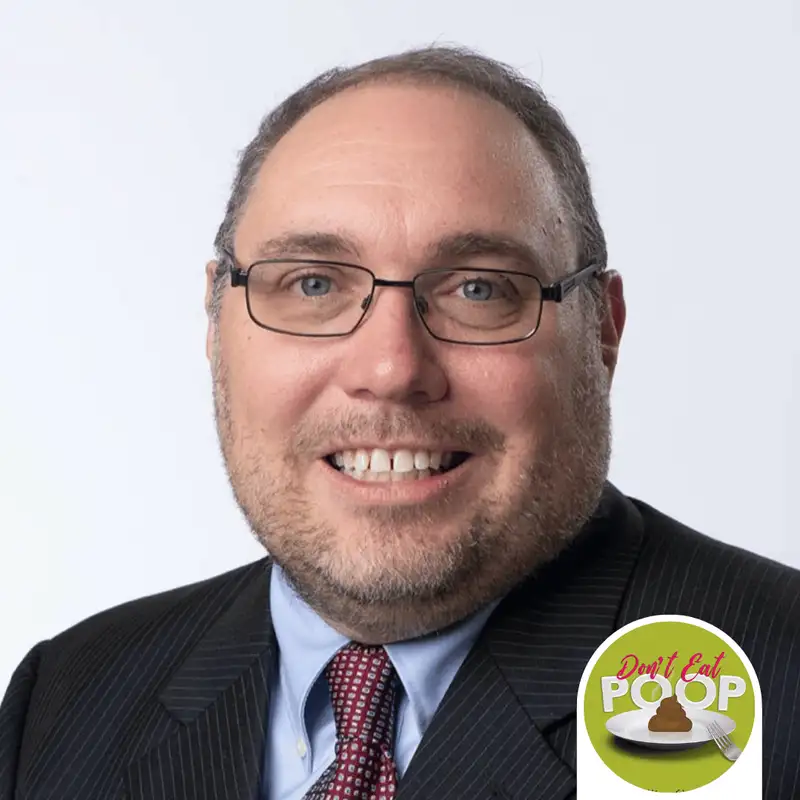
Food Safety Inspections Explained with Steven Mandernach from AFDO | Episode 158
DEP E158
===
[00:00:00] Steven: The states get asked to verify these inventory places, find them out of business, provide photos, provide declarations, provide 50 pieces of documentation, saying they're out of business, try to, and then they suddenly they do this. Then they never get removed from the inventory. Then the next year, they get assigned to do the same thing again.
The way he describes it is we have to take a picture of the entity of the coffin, bury it, dig it up every two years to make sure it's still dead, and we gotta get more efficient.
[00:00:34] Intro: Everybody's gotta eat and nobody likes getting sick. That's why heroes toil into shadows, keeping your food safe at all points from the supply chain to the point of sale. Join industry veterans, Francine l Shaw and Matt Reci for a deep dive into food safety. It all boils down to one golden rule. Don't eat poop.
Don't eat poop.
[00:00:59] Matt: [00:01:00] Hello. Hello. We are at the Food Safety Consortium and we always end up talking to just like the most interesting people at the Food Safety Consortium, and today is no exception. We are talking with Steve from atos, which is going to be a lot of fun because at the time of this recording, we are literally in a government shutdown and Apto works with the government.
So this is really fun.
[00:01:27] Steven: This is the only time in my life I thank God we get, we work on the previous year's money, so we're good.
[00:01:35] Matt: So Steve, I don't know if we're gonna have the link in the last time that we talked, because that was a really fantastic conversation last year as well. But Steve, why don't you introduce yourself and what it is that you do?
[00:01:47] Steven: Sure. I work with state and local programs essentially that are doing food safety work. So whether it be retail, manufacturer foods, produce, and some other areas. But those are the primary ones really helping them with what they need. So it might be they need [00:02:00] resources, we manage some IT systems for some of them.
We also do some work with program standards or ISO like standards for regulators, all of those sorts of things. And a lot of training.
[00:02:09] Matt: FTO itself is an association of like state and local
[00:02:14] Steven: food safety. Our primary members are state and local food safety programs. Some periods of time. The federal government is members also not as much today.
That goes back and forth. In five years, it'll probably change again. It's just one of those things. But yeah, it's largely that's who we work with. Those are our bread and butter. It was formed 130 years ago now by some states looking at saying, Hey, we have stuff going across state lines. We need to work together.
And as you all know, that's well before FDA was formed and Harvey Wiley was a member.
[00:02:43] Matt: So you're like the association for the actual state and county food safety
[00:02:47] Steven: people? Yep. And it's really the food safety level. You have nasda and asto that represent the commissioner, director agency level, and then we work with the individual program, the food safety program level folks.
[00:02:58] Matt: Got it. And so the FDA [00:03:00] is a, depending upon the year, is a member or not?
[00:03:04] Steven: That's right. Or funder or not normally a funder in some way? Yeah, no, and to some extent, just like a trade associate, we would do, we represent those members and help advocate for their position, whether it be on the Hill or with FDA or USDA as things are going on or working with industry to try to figure out, hey, we see this problem, is there something we could do better?
Or vice versa. I often get the call from industry, we see this problem, is there something we could do, we could do to fix this?
[00:03:29] Matt: So last year I'm gonna recall some of the conversations that we had last year and I would just love to hear, has anything changed or anything from last year? Because we talked about the FDA reorg 'cause that was in the process of happening.
Underneath the Biden administration. Correct. So I'm sure there's a whole different reorg underneath the Trump Association. And then we also talked about some of the issues with getting people into those jobs of actually doing the inspections. Let's tackle the first one first. Sure. What's going on with the FDA and the USDA [00:04:00] in food safety?
[00:04:00] Steven: Sure. So I really think actually food safety won the appointee lottery. So when I say that Kyle Dames is amazing at FDA, I would argue probably one of the best leaders I've ever seen in the agency. He walks into meetings very well prepared,
[00:04:18] Matt: really
[00:04:18] Steven: asking great questions. I've been nothing but impressed. I just got some time to sit down with the administrator at FSIS.
Equally impressive. I was actually energized when I heard his presentation and what he's really focused on. He's got a huge emphasis on food safety culture in the organization. He is really thinking a lot about how do we retain and recruit staff and make it so they stay with us essentially, versus this is a stepping stone to another job, really a careers with FSIS, which I thought was interesting, and particularly in the non veterinary track, which I give him huge credit.
He's been out doing the road tour. Both of them have, I've been watching them. They're out going into facilities, learning what's happening, [00:05:00] spending a lot of time doing what I would expect, and that's awesome. That's what we would want to have happen. Also say they're approachable.
[00:05:06] Francine: I'm stunned. I don't even know what kind.
I'm happy. I'm thrilled.
[00:05:10] Steven: I have to say I, it's been an amazing experience. Really good folks. I have not seen anything that I would've made a different decision on.
[00:05:20] Matt: Okay, so that begs the question, oh, what you just said is what a leader is supposed to do. Mm-hmm. Yes. Be approachable. Try to make sure that your employees want to be there and happy.
Make sure that they're on a common mission. Really focus on actual food safety. Okay. If you are so excited about that, what were the other people doing? Which makes me, does that beg the question? What was the focus of the people before?
[00:05:45] Steven: Clearly I have been happy with FSIS leadership for a number of years.
I think they have done a first rate job, huge fan of the deputy Administration administrator there who is administrator for a period of time. Huge fan of the previous under Secretary of Food [00:06:00] Safety, and clearly the Deputy under Secretary of Food Safety. They're all great folks. I'm excited with Minnie Brahe.
I know what to expect when she gets confirmed and she's good. She'll do a great job of that position. She did a great job before. It'd be nice to get her confirmed before we go into the midterm elections. It's a little ridiculous that we can't get that position confirmed quickly. But the others, everyone has a different focus.
Jim Jones clearly had a focus of implementing reorg. He did that. There are still some things left. Can I go to reorg for a second to talk? Yeah. Go to reorg. Yeah, we, you mentioned that as a topic and let's talk a little bit about that. We have seen some successes in Reor. I'm gonna give an example that I know that you will know a little.
Let
[00:06:39] Matt: me talk about reorg. We're talking about
[00:06:40] Steven: FDA reorg, which needed to happen. We'll just say, I think it's not fully realized yet, but I'm gonna give an area where we have had a fundamental shift in how it's operating. For those of folks that are in the retail industry, they will understand what I'm talking about.
The field folks that used to provide [00:07:00] technical assistance to the states when they had a weird question, did the standardization to ensure they were consistent, provided some of the training. Those folks were under the field operation, the former ORA, and then the policy folks were over in SIF San who did the food code, and those two shall never be linked.
They were under different lines, so you ended up with very divergent paths in many cases.
[00:07:22] Matt: Inconsistencies.
[00:07:23] Steven: Inconsistencies '
[00:07:24] Matt: cause people writing the code are also not the people explaining to the states and the counties what the code is. And so then there, there would be disconnects because depending who it was, it would be the interpretation of what the code
was.
[00:07:34] Steven: We absolutely, and it wasn't intentional and in fact maybe even some conflicting priorities, maybe not an agreement on the agenda and those sorts of things. While they tried very hard to work together, they were different organizations with different performance measures and all that. It just didn't work.
They are under a single leader, under a single boss now that is huge. We are seeing benefit from that already. Now that program is one that is not an essential program. So almost everyone is off right [00:08:00] now. But I'm really excited by what I see. Lori Farmer, longtime leader in the cooperative programs came outta the southeast, is uh, leading the whole retail group now, doing a phenomenal job.
I am nothing but impressed. Great example of something that really worked well in Reor. I think the verdict's still out on. Is this kind of dotted line between the field operation and the deputy commissioner working? I don't know that yet. We haven't really seen if that's gonna help or not. I think we're seeing some other things.
I think the chemistry, the food chemical group is working really well. I'm seeing good things coming out of that. I'm seeing them making some good prioritization. They're being very transparent on this is what we're doing now. This is next. This is next. And they're tiling everyone. I've been in stakeholder meetings with them and they're really doing a nice discussion and I think they're being thoughtful about what they're doing.
So those are all really good things and what we would hope resulted reorg. [00:09:00] There's still some amount of, I would like to see them all take the EPA manual for how do we implement lean government and use it. There's still some chronic issues. I mean. We know inventory is a, been a chronic challenge. One of my good friends and colleagues who a lot of the, your listeners will know Joe Rearden from the National Association of State Departments of Agriculture.
As he says it, the states get asked to verify these inventory places, find them out of business, provide photos, provide declarations, provide 50 pieces of documentation, saying they're out of business, try to, and then they suddenly they do this. Then they never get removed from the inventory. Then the next year they get assigned to do the same thing again.
The way he describes it is we have to take a picture of the entity of the coffin, bury it, dig it up every two years to make sure it's still dead and we gotta get more efficient. Other thing that we find with inventory is there's a move within FDA that is not in the CFR, not in the law to [00:10:00] consolidate registrations when they're within a nearby geographic period.
I'll be honest, if I were. One of those operations that has lots of different operations in a nearby D geographic. Imagine I'm a grocery or a convenience store brand that has multiple types of facilities in the manufactured food sector. On my corporate campus, I probably wouldn't want them under a single registration, but I've got seafood, let's just put this A FC, I have a bakery, I have warehousing, and who knows, probably a commissary of some sort.
All those things there. They're all very different operations and I can security. If one thing goes wrong, I'm not having a, my registration threaten to my whole operation. That makes a lot of sense. Not just that, but when we select something for inspection, you default to the highest risk item. Are we ever gonna get down to that warehouse of that facility that now has 21 different things on that registration?
Probably never. And not to say a warehouse is important, but I don't want [00:11:00] no eyes on there for 50 years.
[00:11:02] Francine: Right.
[00:11:03] Steven: I think that's where there's some gaps. And so I think that's one area that, and I think we're getting consensus within FDA, that it's not working for them either, but we gotta get that better.
[00:11:12] Matt: You say that, but with the mandate from the FSIS to do X percentage of facilities with an FDA number
[00:11:20] Steven: mm-hmm.
[00:11:20] Matt: Go and perform an inspection on an X amount of them.
[00:11:22] Steven: Yeah.
[00:11:23] Matt: There's like what, 300,000 facilities with an FDA number? Yeah. Somewhere around there
[00:11:27] Steven: in the world.
[00:11:28] Matt: And they go and see 1200 a year.
[00:11:30] Steven: It's about, so between domestically it's about eight.
Thousand a year, but yeah. Yeah. Oh,
[00:11:35] Matt: okay. The numbers that I see sometimes where they show their inspections,
[00:11:38] Steven: it depends on what it is, but it's about 8,000.
[00:11:40] Matt: Okay.
[00:11:41] Steven: And the number varies a little bit. If you are looking at COVID numbers, it was dramatically lower.
[00:11:45] Matt: Ah,
[00:11:45] Steven: they were very conservative
[00:11:47] Matt: and COVID. And if they send it out, like
[00:11:48] Steven: it's, it's two years.
[00:11:49] Matt: So I'm looking at C numbers, I looked at that even. So 8,000,
[00:11:52] Steven: not a lot.
[00:11:53] Matt: It's less than 10%.
[00:11:55] Steven: And then maybe in a good year, some number of foreign [00:12:00] inspections.
[00:12:00] Matt: Right.
[00:12:00] Steven: But it's not significant.
[00:12:01] Matt: So when you're looking at that number, they're never gonna get to the low risk if they're going by risk.
[00:12:06] Steven: That is exactly right.
But the good news is most states have a mandate also, and yes, they're getting there.
[00:12:11] Matt: That was gonna be another question I was gonna ask
[00:12:13] Steven: you. So one of the things that I think is gonna result, since we talked, the Office of management budget had this language in the recent budget documents for FY 26 that required instructed FDA.
And when it comes to the OMB, which is essentially the White House, it is part of the White House, it said that they wanted to move. Most routine domestic inspections to states, that's not today. Tomorrow, that's gonna take time, and that doesn't mean everything. I would argue that I think we have agreement that certain highly technical inspections should remain an FDA infant formula is a great example.
I would argue low acid canned is probably something that makes a lot of sense to leave there, but most routine inspections. Probably don't need to be there. So we're in that period right now where we're trying to figure [00:13:00] out what does this model look like going forward. We're gonna get there, it's probably gonna be a five-year implementation period overall.
Starting to look at some things. There's some big things that have to happen. We gotta do better at how we exchange information electronically. Yeah. Too much of it is not electronic in a substantive manner. We're seeing some additional consistency in how we collect information in manufactured food. So we, whether you have an FDA inspection or a state inspection, we've all agreed to.
The key information that must be collected in some templates there. So you're gonna see a much more consistency than what you've seen in the past. There weren't agreed two templates before, and depending on what part of the country you're in, you got very different inspections. It was, I literally looked at, I recently got to see some of what people were submitting and being required to submit, and they were not the same type of inspection in any form or fashion.
So this helps. I think we're seeing some of that, and a lot of that came from FDA. The states were unhappy. FDA was equally unhappy with what they're getting. So I think that will improve some [00:14:00] efficiency. The challenge is though, if we don't do that at some point, we actually had one state send back two thirds of their inspections this year and say, we're not doing it again.
Next year we're done. We're gonna do a third. It's too hard to work with you. It's taking too much time.
[00:14:16] Francine: Wow.
[00:14:17] Steven: And I get it. They're like, we have plenty of work to do. The money doesn't change that much for us. This is a small amount of our, and it was a large state to hear huge inventory. And we're seeing this more with large states.
And if you look at the five largest states, they are some of the smallest contracts right now and they shouldn't be. And there's not a lot of FDA resources in those states either. So that is because it's hard. But I think we are getting better and I, I think they've got the message. I'm pretty impressed with some of the leaders that are in place now.
Kyle's amazing. His next, the folks below him, I'm seeing really good things happen. I'm finding them very interactive, which is good. They respond, they ask questions. You send an email, you get a [00:15:00] response. Those are all good things, and they're interested in talking and listening. More important probably they listen too.
So I think we're seeing good stuff. I think our, our next opportunity is to really go, how do we make. Government function better.
[00:15:16] Matt: I'd love the idea of relying more on the states. Like I'm naturally like a Federalist. Like I want each state to be their own entity and then be able to, but I also believe there totally is a need for central government because you can't have each state operating in their own way all the time when it comes to something when our food system is so interconnected, right?
[00:15:38] Steven: Absolutely.
[00:15:39] Matt: So multi-state outbreaks is a perfect example. Global food chain is coming in and
[00:15:44] Steven: I think the chemical safety right now that we're seeing very different laws enacted across the country, while it's gonna prompt the federal government into action from a overall policy perspective, this is.
Really difficult for what is a international food [00:16:00] safety system having a different requirement in now upwards. It could easily be upwards of 13 states of what you have to disclose on labeling or what dyes you could use and those sorts of things. That's not effective.
[00:16:11] Matt: No, but it's not effective. But it, it's happening because the federal government is so slow, right?
Like I run ellipse analytics. We're the certification and analytical testing arm for clean label project. And so we're one of the people that the FDA loves to hate, I think. But like we're, one of our certifications is Clean Label Project certifications based off Prop 65 expectations. We have another one, first 1000 days.
It's based upon eus expectations. Yep. And then our Purity award is based on testing the category, figuring out. But the contaminants loads, like infant formula, clean label projects, just ran a, a study on that and it was picked up by a, B, c news and DC What I found interesting was the FDA, which is very different than I've seen in the past.
When, uh, the FDA was asked questions about are you're finding DHP and [00:17:00] DBP, which are phthalates in an infant formula in some of the largest companies. What's going on with that and why is it that some of these newer companies in infant formula that aren't part of wic, why are they cleaner than some of these ones out there?
And the FDA flat out just said, you know what, we haven't really touched this in 30 years, and that is something that we're looking at doing. They didn't make excuses. They just said, this is, this is part of our thing. We're moving on that. Mm-hmm. And I was like, whoa. That's refreshing to hear. My bad. We're getting better.
[00:17:32] Steven: No, no. And they do have a tremendous portfolio. You're looking at everything but meat, poultry, and egg products. That's a tremendous portfolio out there. And there are different risks with every one of those categories.
[00:17:44] Francine: So while I agree with what some of what you said about the state's working independently as somebody that's worked in all of the states, man, it is complicated.
[00:17:53] Steven: Oh, no doubt.
[00:17:55] Francine: There needs to be some kind of uniformity.
[00:17:57] Steven: Absolutely, and that's the goal. And we've [00:18:00] seen it for the most part, when you look at the regulations and manufactured food, they're all largely based on part one 17, where there are deviations, they're pretty small. There may be a regional reason why there's a deviation.
I use New York as a deviation in juice. There's a reason they had some awful history with juice outbreaks, so they have a little bit more stringent standard on juice. There are reasons for that, but those are pretty few and far between. Overall, most of it is largely the same Now. Retail is getting better.
Let me just tell you. The food code adoption rate is getting much better and much quicker. Part of it is the food code is stabilized and we're not seeing dramatic changes between additions, so it's a lot easier. And frankly, perhaps I would even argue the difference between additions means that even if you don't adopt, you skip between, it doesn't matter as much 'cause it's largely the same code and there's not as many differences.
We're hearing good things there. We still have some outliers that are. A ways behind, but those are seem [00:19:00] to be coming along. And I would say industry pressure is helping. Industry clearly wants, you know, when I say at least the major brands do not want you back on the 1997 food cook, that is not helpful.
And we agree. So I think we're seeing good work there. I will say that we're seeing greater consistency in the programs in a good way. Like they're working together in a much more cohesive manner. You saw some of that regionally before, how it's becoming more national at the state level. Now the local level, some amount of that, more challenging.
And of course retail, each state's method is different. We have everything from Massachusetts, which is very decentralized with little state leadership to Florida. That's entirely a state program. Right. And in between it makes it complex, no doubt. But we're seeing some really. Interesting improvement.
We're seeing the programs coordinate a whole lot more, which is good. So they're borrowing from each other. We're seeing them think [00:20:00] together, how do we do this better? Can we do this differently? We actually just did something that we'd been thinking about it for a long time. Has a plan. Reviews for those specialized processes.
Require, has a plan. When you are at a state or local, that is a time consuming challenge and you often don't have great expertise to do it. So one of the things that our members came to us and said is, can you help us at least do a review of these and provide a recommendation on what to do? We bring in the jurisdictions that are interested in participating and have them join us in the discussion and help figure out what's missing.
Are there problems? But we just went through one for a large, one of the large retailers in the country, and what we heard back from both the retailer and the participants was this was very valuable because we didn't have to do the coordination with a bunch of different people. And that was the thing. I can tell you when I was in Iowa, I probably had some that sat on our desks for two years.
It just, it was not the emergency and sometimes we were waiting for answers [00:21:00] back and forth. There's a lot of that on them. But in this case, we had uniform expectations of the folks applying and the folks that were doing the working with us in the review. Asked anyone that they intended to use it in to participate.
Many of them took us up, some didn't. Some said, whatever you all say, good. For me, that's an improvement because having 30, 40, in some cases, 200 jurisdictions review a HASA plan that's inefficient for all of us. They could be doing much more important stuff with that time.
[00:21:27] Francine: Right?
[00:21:28] Steven: Yeah. So I think we're seeing good stuff and people are playing in the sandbox a little better than
[00:21:33] Francine: That's awesome.
That's amazing. Amazing.
[00:21:34] Steven: Yeah. In fact, what I actually heard from my, when talking to my manufactured food folks, which have some of them have retail programs, is we want you to do more of this in manufactured foods. And help us do more of those sort of, so like we do a quarterly call with retail program managers.
Wouldn't think that was a huge deal. We bring in folks that are doing the most innovative front leading edge stuff. What are you doing? How are you approaching that? Or where they have a problem area, let's bring [00:22:00] in some folks and talk about how might you solve this and that sort of thing. Manufacture food.
Folks want that too now. They're like, we like that. Could we do this here?
[00:22:07] Francine: So the one of the things that I noticed and we were asked to speak about when we were in, was it North Carolina?
[00:22:13] Steven: South Carolina.
[00:22:14] Francine: South Carolina,
[00:22:15] Steven: yeah.
[00:22:15] Francine: Was bringing industry and academia and the environmental health together and how do we work together and how do we make this happen?
And I was so impressed by that. And the people in the room really wanted to do that. And that's not something that's always happened.
[00:22:32] Steven: I have to tell you. I think we are much more aligned in collaborative and overall in nature. I could just, I was just at a meeting of a. Recently for a large brand that brought in their suppliers, their, a lot of their folks that do food safety and the at the store level, a lot of their folks that do and a lot of the regulators into the same room and had the same discussion altogether.
I was like, and I was amazed they were all having [00:23:00] the very same conversation. That was really good and we're seeing stuff like that more. We're seeing a lot of the industry participate in things like food safety, task force, food protection, task forces. Great opportunity to work together and have those discussions about what's next, what's happening, what do you think about this?
Those are the most important things. Or on the reverse side, when I was a regular, I wanted to hear, what are you doing next? I'm also spending a lot of time talking about how do you make good policy at the state level? How do you build those stakeholder relationships? The most valuable thing I did every year as we were getting into November.
Myself and I, my boss would come with me most of the time and we'd go around to the major trade associations that were in the state, that rep were in the food world, so the restaurant association, the grocery industry, the convenience stores. We'd go visit all of them and say, here's what we're thinking about for right now.
Here are the areas that we're working on and they would talk about. So we'd talk about anything that's coming, regulatorily, anything that might be in the legislature that we're hearing about. They talk about what they were gonna be doing. We [00:24:00] have a conversation. We say, are there opportunities to work together?
What we found was it got even stronger relationship over time is literally we were calling, their lobbyist was calling us and saying, Hey, I heard this bill just dropped. We want to talk about it. We'd like to see what you're thinking.
[00:24:15] Francine: When I was a health inspector and I would go into different facilities, the ones that wanted help and legitimately wanted to learn, and I'd say, how can I help you?
Yeah. What can I do to make this easier for you? They would look at me like I had three heads and go, wait a minute, what do you mean you wanna help me? No.
[00:24:30] Steven: So we just completed a survey of over 700 small retail operators, so restaurant, grocery store, convenience store under 10, mostly single op singles, uh, locations.
Uh, and what we learn from them is they get their food safety information. Over 60% of them identified their regulator as the expert they rely on for the food safety information. I knew it was gonna be a strong, but when I looked at it, I was like, oh, this is not, this is much more [00:25:00] important than I would've guessed.
And I suspect, and when we looked, it was, if it wasn't the top, it was the second. It was a huge deal. But what the thing that we haven't done perhaps, is think about that as we build what the inspection model looks like, maybe for a brand. I would argue you're probably doing a verification inspection. Is the food safety management system working?
Do we have active manager control present? And really, we don't really regulatory adopt it, but you're always looking at food safety culture because if you have, if you don't have food safety culture, you probably don't have the other two. So you know, you're looking at those three things, but it's a different world when you are in that role of a small operator, you're much more their food safety partner and it's a different inspection.
Mm-hmm. Probably takes longer. You absolutely have to spend more time on the front end. The UK did a huge project on this, God, almost 15 years ago. Now, let's see, smarter food safety, better business or something. It's right, it might be the reverse, but it was amazing and they found tremendous results from it and long-term improvements from those operations that [00:26:00] participated in the program and just literally had a coach as they were opening, Hey, let's identify our risks.
How are we gonna control for those risks? Hey, when you let's, and let's do a verification step in that process and see how things are going. If we need to retool. Those things make sense. Hey, if we could make those small operators do well, let's be honest. When we look at outbreaks, a lot of them at retail are the small operators.
Mm-hmm. So if we could do better at that point and really get them off in a good way when they start their business, gonna be so much better in the
[00:26:30] Matt: Yeah, and that's a really good point because everybody hears about the multi, the national, multinational, big, huge food safety or multi-state. National type of food safety outbreaks.
But there's a lot more little tiny regional outbreaks that happen every single day that nobody really knows about except for within that community. And then that restaurant or that retailer is like blacklisted. Nobody will go to that place anymore because they know that 14 people got sick at a, at an [00:27:00] event here or
[00:27:01] Steven: so, maybe not as blacklist as we think back years ago when I was in Iowa, we actually did some focus groups on this with the Iowa State University.
And what we actually heard was often folks didn't report a potential illness because they didn't want to get them in trouble and they were their friends.
[00:27:18] Matt: Ah.
[00:27:18] Steven: Which is not shocking to me. I think it's a little bit different depending on where you are. Yeah, yeah. But they very much were conscious of, these are my friends and neighbors.
I have worked outbreaks in some of those small locations. And I will tell you, the community was very supportive of them. And when they did the right thing and they said, we're gonna fix this, we're gonna figure it out. We're committed. You saw the community largely rally around them. I've had others where they weren't quite as Right, right, right.
Proactive, perhaps, and perhaps the business didn't recover in quite the same matter or didn't survive.
[00:27:49] Francine: I can think of one in particular in Pennsylvania right now that absolutely did not recover, but I think somebody died. Absolutely.
[00:27:56] Steven: That's part of it. That's definitely part of it. But you know, I always think of [00:28:00] some of the folks that I worked with over the years, most of them tried to do the right thing and they really did.
[00:28:05] Francine: Nobody intentionally, I shouldn't say nobody, most of the time they're not intentionally making somebody sick or killing somebody,
[00:28:13] Steven: lack of knowledge.
[00:28:14] Francine: It just, they just don't understand.
[00:28:17] Steven: But that goes
[00:28:18] Francine: back to they don't know what they don't know.
[00:28:20] Steven: That goes back to what we have to focus at as when we're doing inspections.
And I don't think it matters. I'm gonna argue a small manufacturer is no different than a re, than a small retail operation. They're very similar. And the difference between the two is not recognizable most days, except what regulation you might apply. I think we need to be more of a coach and when it 100%.
[00:28:40] Francine: Yes,
[00:28:40] Steven: and we can do that. That's a change in mindset. We have to get off this. We're a regulator. We can't help you too much. We have to get clear. We have to stop focusing on the easy stuff. It is easy for me to tell you that You have three flies. Sorry. Oh, it drives me nuts. But we gotta do better.
[00:28:59] Francine: I don't think I [00:29:00] ever counted flies.
[00:29:01] Steven: I literally read some reports where they have counted ban flies. Oh, I see. I, I'm like,
[00:29:04] Francine: I read them too.
[00:29:05] Steven: This
[00:29:06] Francine: is, I'm like, whose job was that?
[00:29:07] Steven: I'm like, no. And then they didn't have time to observe cooling.
[00:29:10] Matt: But when I was talking about like the states working with the FDA, this is what I'm talking about is the states already have their own programs.
[00:29:17] Steven: They do.
[00:29:17] Matt: You represent those people? The counties already have their own programs. Some places, depending upon the, some big counties act independently then, because they're like. Some big counties are bigger than the rest of the state. Right.
[00:29:29] Steven: Some big counties are bigger than states. One of my staff comes from Harris County, Texas, and in all Odyssey she was as big as 10 of the states.
[00:29:37] Matt: Right, exactly. And those people, they have their own programs. They're out seeing all these manufacturers, these retailers and all that different type of stuff. And where I think it could be better is if there is a format at which it makes it easier for them to report to the FDA about what's going on with all these.
And then the FDA uses that. I know that it goes into their model for risk. Yeah. But the more they work together, the better it is. Then for FDA to [00:30:00] go, this facility has been inspected multiple times. There's an issue going on here, we need to go and put the hammer down.
[00:30:08] Steven: Absolutely. So one of the sad things that's happened since we talked last year is one of the things that was victim to the funding cuts was a state system that was 25 states were planning to join.
That was $14 million in three months from pilot FDA, cut the funding. Some are moving ahead with it at at least 40% greater cost than what they were going to pay before. Pretty significant investment, but we need that sort of standardization and systems we're getting there. Naturally, when all is said and done within two years, two systems are gonna be predominant in this country.
It would not be hard to consolidate that information at a data level and with real-time information, what we really need is the, where we can put it all together and it could be used for lots of purposes. If you're a business, [00:31:00] great to have it. Some of the tools are out there that are commercially available to get some of that information.
Maybe, although there's getting some issues because a lot of those are sourced through scraping and that's getting a little harder to do Right now. People are stopping scraping for various reasons and a lot of those have been stopped. So that's out there. But not everyone has the resources to, to subscribe to those services and see what's happening.
Secondly, the public wants to know. If we could make it easier for the public to find the inspection of results and the operator knows that the public's actually, someone said and says, I'm coming here because I saw you did good on your inspection. I looked at your inspection. You guys did pretty good.
That changes behavior, and I can tell you when we started putting inspection reports on the web for the first time, we were the most used site in the state. Two thirds of the year tax season, we were the second most high it was. And yeah, was that as much necessarily every day over time? But no, it was huge data.
If we can get to [00:32:00] the point where we can pull that data together and really start trending it and looking for what's happening, I've done some of that with, I've got about 900,000 retail inspections that we're looking at the data. I've learned some pretty interesting things. Everyone tells me that they can't possibly spend as much time as they need to do an inspection and fi and observe the risk factors.
The data says if you spend somewhere between 90 and 120 minutes, you probably can observe most of the risk factors. And frankly, in all honesty, are there some places we don't need to go to some low risk places? I'm not gonna tell you, you have to go to the dollar stores. I'm realistic. There may be problems.
There gonna be one of two. It's either gonna be the freezers or refrigerators aren't working, which actually are monitored centrally and the customer's gonna know it. And two tests. Okay. The consumers are gonna tell you if there's a pest control problem in that dollar store, they're the first to call you.
They're gonna post it on Facebook. They're gonna, you're gonna know it and you're gonna be there. And frankly, the brand has a reason to deal with that too. [00:33:00] This is a partnership. We are secondary in this system. They are primary, it's their responsibility. I think we could reallocate some resources. What I'd also argue is many states have a state law that is a mandated inspection frequency in concept that is great.
In practice. That is terrible. So why? Because by doing a mandated inspection frequency, what we just did was create the average inspection link that you have for every one of the facilities, and it never differentiates between high and low risk. I can literally look at the state mandate, divide the numbers by number of establishments, number of inspections, and come to how long the inspection takes on average.
No surprise they're doing what they're supposed to do and what they're being measured on. Would it better measure, be something simple like. Are they performing the high risk inspections on the frequency that they should? Are they observing the risk factor in high risk firms? Those are the questions that we need to measure.
Maybe not the number of inspections. That's a hard transition, but I'm [00:34:00] beginning to see people do it. I'm seeing a real improvement in how programs are thinking about their data and what are we doing? What are we looking for? You have to implement that type of performance throughout the organization, from inspector to supervisor, to program leadership to agency that is complex and everyone loves the widget.
I can count inspections. I know what they are. Let's change that. Uh, we need to change that. And even at the federal level, I would argue maybe the metric of number of inspections is not the right. Maybe we could do different metrics.
[00:34:32] Matt: The number of inspections. Brings me to the second part of our conversation because are the number inspections mandate tied to an increase in the number of people?
No, which was the second part of what I wanted to ask you, because last time like you were like, the sky is falling, we're losing people, we're not getting young people coming in and actually staying long-term it has that changed or gotten better at all?
[00:34:56] Steven: First, anytime there's a extensive government shutdown at the [00:35:00] federal level, that is bad for retention of young people coming in, particularly in areas we're the entry level positions and FSIS and FDA.
It's the inspector investigator level, right? Yeah. That's where the entry level folks are coming. Those folks, you start asking, do I really wanna be with an organization that doesn't pay me on time? And those sorts of things. It becomes harder, and if you have other options. You're really thinking about those, I guarantee your retention will be lower this year at both.
That's just the way it happens when you have a government shutdown. We've seen it. It's one thing if it's three days,
[00:35:35] Matt: but on the State Department we were talking about this, the state and that type of stuff, like how are they, how is that going? Are they,
[00:35:40] Steven: I, I think industrywide retention is hard. If I were talking to, if you were interviewing an industry person, they're gonna tell you retention's hard right now.
Yeah. It's everywhere. We have a very tight labor market in general in the country. We are seeing that, yes. I think the one thing is maybe we're hitting a point where some folks are recognizing, Hey, [00:36:00] this might be more stable than other things right now, which is helpful. I still think the states are having some advantages.
Most of them are doing home-based staff. They normally get a car assigned to them and some of those things which make it easier for them to do their job, and they tend to have stated and local inspectors often to have some level of flexibility that makes a difference. I also think they actually feel empowered most days to do their job.
You go home and you feel good about what you did in most days. If you can keep that going, if you could model, make that happen at the federal level that makes people stay. There's a lot of research that says people don't leave jobs for money. They leave jobs, they leave bosses. They're unhappy. They're not feeling like they're doing something significant.
And I could relate, I think, through my life. That's fair. And I think when I talk to others, they're like, oh no, I'm leaving. The boss. I didn't like, it was not working. I needed something different.
[00:36:55] Francine: Every job I ever left.
[00:36:56] Steven: Yeah, I'm the same way. Or where I went often I was interviewing a boss [00:37:00] more than they were interviewing me.
[00:37:01] Francine: Yeah,
[00:37:01] Steven: that's very true. There are people that I would absolutely go work for in a heartbeat no matter what they asked me to do. And there are others that there's not a chance in hell I'd ever go back. Sorry.
[00:37:10] Francine: 100. Yes. Yes.
[00:37:13] Matt: Yes. 100%.
[00:37:14] Steven: Yeah. And I think that's the thing that we have to think about. Now, I will say government in general is unsuccessful at doing some level of succession planning.
'cause we do have such a process we have to follow and make it open, et cetera, et cetera. That makes it very hard to do that. That is still a challenge. And inspectors tend to be relatively lateral. You're not, there's not a, there's maybe, in my world, there were 30 inspectors and four positions above them.
And two, uh, three of them were non-supervisory positions in most cases, but they pa paid slightly more. That's pretty normal. It's a very flat organization. So you have, if you find your satisfaction in working with the people, learning new things, there's always something new [00:38:00] in the industry. You both have been in restaurants.
That kitchen has changed so much in the number of years and what they're doing every week. I read, I don't know what this is, and that's the way it goes. That's awesome. They're learning lots of new things, if that's your world. But we want those type people. That's the ideal candidate. Someone that's curious and interested.
I'm gonna, oh, I'm gonna say something that will make some of my colleagues very angry. I'm not sure. It's a science major.
[00:38:27] Matt: Yeah.
[00:38:28] Steven: I have huge doubts. I, I see you shaking your head.
[00:38:31] Francine: No,
[00:38:32] Steven: I think we want someone, we could find someone with critical thinking skills, good time management, and that communicates well.
I could turn them into a good inspector.
[00:38:41] Matt: I'm shaking your head because she agrees with
[00:38:42] Steven: that. Oh, I, no, I don. No, I, no,
[00:38:44] Francine: it's not a science major. I agree 100%.
[00:38:47] Matt: I mean, it can be, but there's a lot of soft skills stuff that needs to be a adopted and also people are really good, like time management. Oh, huge.
Really good with people, really good with understanding of what needs to be done and what you can train [00:39:00] them on. All the science and expectations. Absolutely.
[00:39:02] Francine: Yes, you can absolutely teach. I'm not saying that it can't be, like you said, a science major, but some of these skills can't be taught.
[00:39:12] Steven: I agree. I have
[00:39:13] Francine: tried.
Either have 'em or you don't.
[00:39:14] Steven: I've tried to teach time management. I'm not sure it's possible. I, I have tried very hard, I don't know how I teach someone how to manage their time when they just don't have, they have never had to, I don't know. I would argue critical thinking, really hard to teach, so I think.
You know, if we can
[00:39:34] Francine: Leadership
[00:39:35] Steven: leader. Oh, absolutely.
[00:39:36] Francine: You can't,
[00:39:37] Steven: it, it really can't.
[00:39:39] Francine: You can see teach certain aspects right. Of it, but there's certain skill sets that you either have or you don't.
[00:39:45] Steven: Absolutely. So I, I think we need to rethink. I would also argue that some of the best folks I ever hired or chefs, they were looking for a more regular life and not having to work every night and every weekend.
[00:39:59] Francine: And they also [00:40:00] understand the business.
[00:40:00] Steven: They understand the business.
They
[00:40:02] Matt: know where the skeletons are hidden because they helped
[00:40:04] Steven: hide them. Yeah. And they're used to the chaos of a kitchen and they can see what's important and what's not.
[00:40:10] Francine: It doesn't intimidate them. That's in any way. That's right.
They're not intimidated by all this chaos. It's, that is happening around them.
[00:40:17] Steven: Exactly. Right.
[00:40:18] Francine: And we talked about this yesterday with somebody else we spoke to. There is a definite difference between filth and working dirt. Oh yeah.
[00:40:29] Steven: Absolutely
[00:40:30] Francine: not. Everybody understands that.
[00:40:34] Steven: Yeah, no, you're exactly right.
[00:40:35] Matt: You say not a scientist and you're, the chefs are the best, which is fascinating because a chef is a scientist, but it's a different type of science. It's applied science and that type of applied science is absolutely awesome and would be an amazing inspector in the mm-hmm. Even. Okay, so they don't have a microbiology degree or they don't have a food science degree, but they are a, they are a chef.
They know the, what the temperature needs to be at. They [00:41:00] know what all these different things, and that's what they're inspecting. I've
[00:41:04] Steven: seen them become amazing manufacturer food inspectors too. Yeah. They have the interest.
[00:41:08] Francine: They also know there are certain things in a kitchen that you see and when somebody's standing there telling you something about a procedure that they've just, you're witnessing if you've worked in a kitchen, whether they're being honest or not.
Mm-hmm. You know?
[00:41:24] Steven: No, I agree. That's a great background. There are other backgrounds that are. I've seen some teachers that have come in and been extremely effective. Yeah. Even if they weren't the maker or the biology or the chemistry teacher, they have the skillset. They get it. They know and you have to manage time or else you have a problem.
And they're used to doing multiple things and having educate. They natural means they've
[00:41:45] Matt: got what both of them have in common too, is both of them know the difference between chaos and control. Chaos.
[00:41:50] Steven: It's true.
[00:41:50] Matt: Because a classroom could be completely chaotic. Yeah. And it'd be controlled chaos. And everybody's learning, everybody's doing their thing.
And it could be absolutely chaotic like [00:42:00] spitballs are going and people are in fights. Drugs are getting passed around as a chef. Yeah. Like a kitchen is chaotic. Just working in a kitchen. A kitchen is chaotic, but when it's controlled, people aren't getting hurt. People aren't getting burned, people aren't, and there's just a, it's moving, but it's moving in the right way.
In the right place at the right
[00:42:18] Steven: time. It's also the ultimate experience in time management.
[00:42:21] Matt: Yes.
[00:42:21] Steven: Because if you screw that up, you suddenly don't have core components when people walk in the door.
[00:42:26] Francine: So I was very young. I was like 24, 25 years old, and I'm old now and I was at that time, long time ago running a million dollar restaurant, which was very high volume at that time, a hundred employees, and we were just.
Getting our rear end kick. You just reminded me of this. We would just get our butts kicked so busy. We were the highest volume restaurant in this area for a long period of time. And multiple times I would have district managers and come in and they would [00:43:00] be like, this is just such chaos, but such controlled chaos because it was such a small it the restaurant was not built to do that volume.
[00:43:11] Matt: Yeah.
[00:43:11] Francine: We, we just weren't built to do that volume. And they're like, but it's controlled chaos. I don't know how you do this, but you, there was no other option.
[00:43:20] Matt: No, and I was managing us in college. I was managing a Starbucks as one of the first drive through Starbuckses and they, like, Starbucks is very controlled on what your labor is, what your cogs are like.
Everything was, as a manager, we were like dialed in. And my regional manager was like, why do you have so much labor? And I was like, because I have two Starbucks in one Starbucks. And they're like, what do you mean by that? I said, I have twice as many people. Going through the drive-through that I do going through the lobby.
And so I have one and a half staff and when they would walk in I was like, you need to come in here. Because the amount of money we were making was also significantly more than what we were allocated for my [00:44:00] labor. So I was like, my labor is in check with the amount of money, but come in and see what we have done.
'cause Starbucks was still trying to figure out like where everybody was supposed to be in these drive-throughs. We created like two separate. Staffing and one shared like a couple people that were shared between these two places, and it was absolutely chaotic in the morning and in, in the afternoon. We had a high school next door and we were like burning through Frappucino machines and they were, they, I was like, come here for the whole day, see how we're running this thing.
And was it chaotic? It was absolutely fricking chaotic, but it was controlled chaos because we had everybody where they needed to be. And they're like, what we're gonna do is we're gonna videotape this, we're gonna send this to corporate so that they could figure out how we're supposed to staff these drive-throughs.
But it was chaotic, but it was controlled. Chaotic.
[00:44:46] Steven: Absolutely.
[00:44:47] Francine: So I, yeah, it's, I had a two lane drive through before two lane drive throughs were a thing, do you
[00:44:52] Intro: know what I mean? It was like, because
[00:44:54] Francine: we were right off the interstate.
[00:44:55] Matt: They had cars back then.
[00:44:57] Francine: Yeah. Yes, yes. We had an inside lane and an [00:45:00] outside lane on the other side of the curb.
And it's, this is what we were doing to move these cars through because. Yeah. Nobody was doing two lane drive-throughs in the mid 1980s. No, we were, you just weren't doing that. Yeah.
[00:45:11] Matt: Okay. So that was a long segue for, we agree with you that the chefs, teachers, a different type of applied skill sets that meet what an auditor needs.
[00:45:19] Steven: The other spectrum, the piece of that is this is a job that may actually improve their quality of life. The pay may make sense for them for other reasons. Yeah. They're interested in this sort of, it's a good career option for them, so that makes a difference.
[00:45:34] Francine: Can I also say I don't have a science degree?
[00:45:36] Steven: I don't either.
[00:45:37] Francine: Yeah.
[00:45:37] Steven: I did do a significant amount of graduate level when I was 40, I started taking and I was like, I need more. And ironically though, I will tell you my most valuable science class, was it biology or microbiology? Taking a semester of epidemiology. That was the one I was like, why didn't I have this 10 years ago?
[00:45:58] Matt: Epidemiology is just fascinating [00:46:00] to, and so few people actually understand epidemiology and it is one of the most fascinating things. 'cause people say all the time, why can't they just figure out where the outbreak is faster? And I'm like, are you okay? Because you're asking that question, you do not understand how epidemiology works.
No, no. And there's some interesting
[00:46:17] Steven: tools, I don't know if they still have it, but CDC used to have an iPad game and solve the outbreak. It really did a great job of showing you how epidemiology works. Wow. And it was really cool. I don't know if it's still out there or not, but it was one of the cool things, and I'm sure they have some, if they don't, they have something like it out there.
Now. It's really it. It is an underrated field. Not just that. It even helps you understand, okay, how do you do medical research and those sorts of things. There are some great ones out there that people don't even realize. I would sit on a plane and play the epidemiology outbreak every time they introduce a new outbreak.
I was like, lemme see if I get this right. I'll tell you, sometimes I didn't, but yeah, sometimes I disagree too, but that's a whole nother story. But that's part of you're
[00:46:55] Francine: attorney.
[00:46:55] Steven: That's that's my job. I am a little contrary as you all know, but I [00:47:00] think we can do better in a lot of ways. But I really do think there are people that, being an inspector is a good job for.
We're also seeing a lot of increases in pay. Some states have gotten been able to really significantly up to 40% increases in what they're paying staff. 'cause they recognize the staff. Were just underpaid. The south still lags overall and I, it is not just here, but in government jobs generally they underpay.
We're still seeing some of that, but much of the country is getting better, so that helps too.
[00:47:29] Matt: We also look at the economies of each of them too. Yeah, absolutely. Like they, if they can't afford to pay at that rate. But also the economies in terms of at least is the cost of living covered at the same rate at which it is in other states with a similar amount.
If that's the case and they do need to relook at that, maybe
[00:47:46] Steven: not some of the regions that's not okay. You're not seeing keep up even in major and relatively expensive
[00:47:51] Matt: areas. Yeah. 'cause areas you would expect it, like obviously Chicago, la, San Francisco is gonna pay more
[00:47:58] Steven: Yeah.
[00:47:59] Matt: Than some [00:48:00] county and New York.
Yeah. New York City.
[00:48:02] Steven: Yeah, absolutely. And I also am hearing even more states looking at the concept of locational pay. So those high rents districts that are really hard to keep people in. Maybe you have to pay a little more than you do in other places. Yeah. Not that different than the federal government, but historically states haven't had to do that.
They're thinking in those terms where, what do we need to do inside? This is
[00:48:23] Matt: really awesome, Steve. Last year I felt like the sky was falling this year. It seems optimistic. This is great.
[00:48:30] Steven: Other thing I will say is FDA, while the Biden administration did make the cuts and we're living through those right now.
The Trump administration has committed to putting the money back. Congress clearly told them in their, in the budget bills that haven't been passed yet. But in their report language, they're like, you shall, and they're saying, we will. So that's a huge improvement. They're also talking about in the future, what do we need to do to expand and do more?
So that, I think that's like
[00:48:53] Matt: Maha
[00:48:54] Steven: Maha's a whole. Yes, absolutely. That's a piece of it. That's lots of other things that they're thinking about. [00:49:00] What do we do? Should we do this differently? Are we doing this right? So I think if we can get to the next step of, I'm a process improvement guy, you can tell I would so like to go implement lead of the government and FDA and I could even, if we chose three things to focus on and do every year, we could make the organization so much better than it is today.
[00:49:20] Matt: I've talked to Francine and Andy Kennedy and some other people about, I would love to write a book. Work like in a committee with the book about if I was dictator for a day and was able to completely for one day and the only thing I did was reformat how the government was run in food safety, not the drug side of things, just food safety, what would I put in place And just have like a small book on all the different things that that could be done to reshape the policy of the United States, including the states and the counties I and all this type of stuff.
We should write that book together.
[00:49:57] Steven: I
[00:49:57] Matt: give it free. I have a vision in my head, a free for, there's only one [00:50:00] person I want to read that book and it's whoever the president of the United States is. Maybe because ultimately who cares who the person is under the FDA if they can change that whole entire thing.
No,
[00:50:10] Steven: I'm a hundred, but I said this earlier today in the general session and I will say someone that I admire greatly. Agreed with me, which was, I'm convinced that food should be under USDA. I am a hundred percent convinced. That makes more sense in the long run. I think that you always have a Secretary of Agriculture that has some basic understanding of food.
We will not always have a secretary of HHS or an FDA commissioner that have that understanding. It makes more sense. Let's just, let's do that. It doesn't mean FDA and FSIS have to be alike, but there are a lot of things that are alike. You would only need one policy shop. You only need one compliance shop.
Think about that. There are lots of things that you don't need. Both of you probably only need one laboratory system. You only need one foodborne outbreak investigation group. There are some [00:51:00] things that you could do that would make it operate much better overall. Plus, look at all the coordination you no longer have to do between agencies.
I'm not convinced you move the CDC function in, but maybe you do. I don't know. That's a little tougher because I see merit to keeping that function with other 'cause. A lot of these aren't necessarily entirely foodborne illnesses. I see some merit there and I struggle with that, but Oh, it would be amazing.
It's a probably a seven to 10 year project.
[00:51:27] Matt: Yeah. Yes. And. As the dictator of the day. I would get it done in one day, but it would take seven years to implement.
[00:51:34] Steven: I hope not seven, but No, I do. No, because
[00:51:36] Francine: we have a lot and we have people, so,
[00:51:38] Steven: but like I say, the problem is not I, I don't even think it's the fundamental level of getting it done within an administration.
Some administrations have proposed this. The bigger question is getting Congress with different committees responsible for the different agencies moving a substantive out of the substantive committees of help on the [00:52:00] Senate side and energy and commerce on the house side. That's a big deal. While this is only a tiny part of their portfolio, they never like to lose jurisdiction.
[00:52:09] Matt: So I'm guessing you occasionally wear Bill Marler's, get the f outta the FDA shirt.
[00:52:14] Steven: I do not, but, but
[00:52:16] Matt: I do.
[00:52:17] Steven: I appreciate exactly what he says. And I will say, and some of my industry colleagues may not agree, but enjoyed seeing Bill yesterday afternoon in the conversation on Poison. There are a handful of people that have changed food safety in this country.
He is among them and he may be among the most influential folks gonna be right up there with he's, he may not be number two, but he is right up there with Harvey Wiley and others. He's changed food safety in this country.
[00:52:45] Matt: He's an anti-hero. He's the dead pole of the food industry, which is like, he's the guy that has created so much chaos that people were forced to change.
Mm-hmm. And he would be happy that people said that about him.
[00:52:59] Steven: Yeah. No, but I [00:53:00] think the other thing though is having, I have sat on those depositions with the attorneys that don't do foodborne, don't listen regularly, and those sort of things. To some extent, I think when you're on the other side of this and trying to settle a case, it's better to have the guy that knows what this is really worth.
The person that thinks he suddenly is gonna buy his new island somewhere off this case, and there's something to be said for, he at least has a pretty good idea of what he's doing and set the value of it because he does set the value of food Barn. His cases have determined what you're, what they're likely to settle at and we don't see them go to court.
Let's be real. These almost always settle. The insurance companies know what they're gonna settle for.
[00:53:35] Francine: Do you wanna go to court when he's in the No. Do
[00:53:38] Steven: you want to go to court in general? No. The guy knows what he's doing and he's gonna do a good job. I mean, there are others.
[00:53:44] Francine: He's not gonna take the case if he's not gonna win.
[00:53:46] Steven: True. He's a smart guy. This is not a, and it's pretty easy to tell, right. I would argue he has some of the best epidemiologists in the country.
[00:53:53] Francine: Right.
[00:53:53] Steven: He's good at this. And he also, no one knows open
[00:53:57] Francine: markets. He served his place, right? Yeah.
[00:53:59] Steven: He's built an [00:54:00] industry. I mean, he's built his law practice entirely around this concept and done very well with it, and really good at what he does,
[00:54:06] Matt: which is great for the victims.
Absolutely. Because ultimately, at the end of the day, the only reason why he exists is because people got sick or people died.
[00:54:13] Steven: Yeah.
[00:54:14] Matt: And what we forget a lot of times in food safety, and one of the things that Francine and I really try to promote on our show is the reason why food safety is important is because we're trying to make sure consumers don't get sick and consumers don't die.
If they do get sick and if they do die, then they or their families need to be compensated for that. And that's the only reason why he exists. Absolutely. Absolutely. If that whole entire thing was not there, if everybody, and if everybody actually was able to get rid of foodborne illness, which is the reason why we're having this conversation just to minimize or get rid of foodborne illness Yep.
Then he wouldn't exist as a law firm.
[00:54:51] Steven: That's right. And I think he tells you, I've heard him literally say, he says it all the time, take me outta business. I'm, I'd be happy if I don't have to work anymore.
[00:54:57] Francine: And he really, honestly, once you [00:55:00] get to know him, he really honestly believes and what he is doing for the victims.
It's not, yeah. He's not
[00:55:08] Steven: doing this to be rich.
[00:55:09] Francine: No.
[00:55:10] Matt: I think that the richness isn't a bad thing for him, but he actually truly does believe. Because he is been through so many, and we say this because Francine and I are actually friends with him. Yeah. And we've grown to be friends with him because we are passionate about what we do and we know that he is passionate about what he does.
And if it was just money hungry, we wouldn't be interested in talking to him. Yeah. But he's put enough things in place in the industry with food safety news, with all this different type of stuff that is, and he comes to this, he was here.
[00:55:36] Steven: Yeah,
[00:55:36] Matt: he was here. We talked to him at this conference and he said to me just today, he said, I see.
I go and I see a lot of law firms that all they are interested in is getting their 30% for whatever the victims are. And on my goal was really to help the industry change. And he said, I tried to get. Where I could actually talk to the industry and the industry wouldn't talk to me. So I started going [00:56:00] to these conferences and I started going to these conferences.
Like I would just become an attendee. And the conferences were like, you can't attend. And he is like, how can I not attend your a nonprofit? I'm asking to go to this conference. And they're like, fine. If you're going to attend, then actually we're gonna make you a speaker. Yeah. And he is perfect. And so that's how he started doing Wow.
Coming to all these conferences is they were like, okay, if you're gonna be there, then we might as well just have you talk as well. And so he is really, truly passionate. Now, I don't believe that he doesn't like the money at the same time, but that's be
[00:56:30] Francine: real.
[00:56:31] Matt: Yeah.
[00:56:31] Francine: Let's be realistic about it. And this is something I've thought about over the last couple months.
Probably at some point he's gonna retire.
[00:56:39] Steven: Yeah. There are some others that I think are really good that are probably the, A generation younger in some ways. I think of Jory laying out of Houston that does a lot of public health cases, tends to do a lot in foodborne illness, environmental health, sort of.
[00:56:52] Matt: But are they advocates like he is? Because I think that's one of the things that makes him most more intriguing is being an advocate.
[00:56:57] Steven: I would argue that perhaps he has [00:57:00] all the air right now, and I say that in a good way.
[00:57:03] Francine: It's tough for them to get their
[00:57:05] Steven: space. That's right. They're not gonna get, you're always gonna go to Bill first, which I mean, but those others and that's fair.
He's
[00:57:12] Francine: earned that. That's fair.
[00:57:13] Steven: Yeah. And he's amazing speaker. He advocates well. Why would you go? That's the reality. I think as these others come into end up at some point, bill is not gonna practice forever. Maybe he will, I don't know. But you know that
[00:57:27] Francine: well, he enjoys what he does
[00:57:27] Steven: as well.
[00:57:28] Francine: So yes,
[00:57:29] Steven: he does love his job and he's, he wishes he didn't have to do it.
I'm sure.
[00:57:32] Francine: So I'm gonna be a hundred percent honest. I'm gonna agree with you. He does have all that. 'cause I don't even know anybody else's name. No,
[00:57:38] Steven: no, no, no. And, and it's happens that over the years I've got to meet some of the others that are out there doing it. There's another one in Minneapolis, last name Oster Home that's quite good and might come from a family that's quite well known in Minnesota in the public health sector, those sort of things.
That's known. There are a handful out there that are doing this too, and doing well and, and they're often doing the, some cases, they may do them with [00:58:00] Bill too. I don't know what they're doing, but I suspect, or they may be doing similar illnesses with different plaintiffs as the case may be, but
[00:58:06] Francine: Right. I'm thinking when I first decided to move into this aspect of the industry, and it happened when I was at a conference.
Yeah. It was like, yeah. I was at the Food Safety summit in Baltimore. The year of the, yeah,
[00:58:20] Steven: the outbreak.
[00:58:21] Francine: Oh no, the following year, the riot.
[00:58:22] Steven: Oh, oh, oh. The, I was there too.
[00:58:23] Francine: The following. The following. I missed the outbreak. Like nobody else was there, but we were there. It was, there weren't a lot of people there that year.
[00:58:28] Steven: Yeah.
[00:58:29] Francine: But I, as a retail, like supporting the retail industry, I was there, I had a booth.
[00:58:34] Steven: Yep.
[00:58:35] Francine: And it was right outside where speakers were speaking, and both Darren and Hal King stopped and talked to, nobody else talked to me, but both. Oh, yeah. Darren and Hal stopped to talk to me. Yeah. And I was so impressed by them.
Mm-hmm. That changed the trajectory of my career. Career. And I've said this more than once. I, of course there are things that you have to do to [00:59:00] make that happen. And there were certain things that I wanted to accomplish, and as I was doing that, there were people that stood out and people that. I just immediately became drawn to impressed, impressed me, and gained a lot of respect for the names that immediately come to mind.
How King Darren Detweiler, bill Marler. Those are just names that were just right there in the front, and the fact that now these are colleagues is just sometimes mind blowing for me. But yeah, these were people with that time that like, wow, these are. The people that are really making a difference in the industry.
[00:59:49] Steven: Yeah, and I would also say we've had some consumer advocates come to that level that are just truly amazing. I think Sandy Kin, Ryan Rahel, Sarah Swisher, they are doing [01:00:00] tremendous work, helping to advocate the consumer position, probably among the best team that we may ever see in our lifetime.
[01:00:07] Matt: Ha. We need to have them on our podcast.
[01:00:09] Francine: Oh, and this was years ago. Oh yeah. That was a long time ago. And it was, yes. So it was,
[01:00:13] Steven: although the names haven't changed much.
Love it.
[01:00:18] Francine: Yeah. They're still here. They're all still here.
[01:00:20] Steven: They're,
[01:00:20] Francine: they're all still doing great work.
[01:00:22] Steven: They're,
[01:00:22] Matt: it's interesting 'cause in this work. You could keep doing it until you have Alzheimer's
[01:00:28] Steven: already dying. Look, argue. Maybe you don't get Alzheimer's if you keep doing it.
[01:00:31] Matt: That's right. That's right.
[01:00:32] Francine: Well, I had an episode, did it earlier today. That was like, what? It just happened to me. But
[01:00:37] Steven: you see that I'm educated as an attorney and I. Have known a lot of, I've had a lot of friends that are in the, their seventies and eighties, still going to the office and they may be reading the paper and maybe do it with one client a day sort of thing.
But does that change your future because you're having, you're going, you're interacting with, with people you're thinking and you're still
[01:00:57] Francine: maybe not always.
[01:00:58] Steven: Yeah.
[01:00:58] Francine: Yeah. I think it,
[01:00:59] Steven: it does [01:01:00] make a difference.
[01:01:00] Matt: It does. I agree with you. Same thing, like I've seen people. Just in my family.
[01:01:05] Steven: Yeah.
[01:01:05] Matt: Retire and then just go straight downhill to just sit on the sofa and watch news all day.
And then they have no hobbies, they have nothing, and then everything goes downhill. Versus people who are at least engaged in something, whether that be traveling or just staying abreast on what's going on. But yeah, I totally agree. Before we wrap this up,
[01:01:22] Steven: yeah, sorry,
[01:01:23] Matt: I like to ask the same questions every single year.
Francine asks the same questions. Okay. What's your favorite thing about the Food Safety Consortium?
[01:01:30] Steven: Oh, I think, uh, I think this is different than a lot of the other groups. We have a lot of the policy folks that are directly from the trade association industry, et cetera. So I think that's fascinating for me.
Now that they're DC based, that changes it. That's a good thing.
[01:01:42] Matt: Yeah. Oh, that's true. Because it's in DC it makes sense. 'cause you guys are just around the block. Ah,
[01:01:47] Steven: yeah. In er. Yes.
[01:01:48] Matt: Because that is different than what it was when it was in New Jersey. Ah, totally. There was, yes, yes, yes. I didn't think about that.
Thank you. And then what would be one thing that you would add?
[01:01:56] Steven: Oh boy, what would I add? That's a good [01:02:00] question. I was involved in so many of the sessions this year. I don't know what I would do next. Perhaps more get into really functional ai. Oh, so what are people really doing that's working? Where are the real prospects?
I think that is, would be helpful for people to see and I would enjoy that.
[01:02:16] Matt: Yeah, I agree. Rick, add some more ai.
[01:02:20] Steven: Yeah. I would also love to get, in my own conference, I'm trying to get regulators to talk about how can we do, what are the AI things we can do to make us better and more efficient? There are some opportunities there.
[01:02:30] Matt: Yeah. And you know what? It's run by food safety tech.
[01:02:33] Steven: It is. You would think that would be good. Better
[01:02:35] Francine: do better.
[01:02:36] Steven: There you go.
[01:02:36] Francine: Yeah.
[01:02:37] Matt: AI is tech, I believe, right?
[01:02:39] Steven: It's, yeah. Yeah. Absolutely. So that's very true.
[01:02:41] Matt: Okay, well thank you so much Steve. This is an amazing conversation. As usual, I think this conversation went like an hour and 20 minutes.
Sorry. That was amazing. No, don't apologize. It was, it flew by so fast. I didn't even realize it until it was, so,
[01:02:56] Francine: I think I also might have written an article on [01:03:00] AI for food safety tech. I'm not sure, but if I did, maybe we can find,
[01:03:04] Matt: this is so many articles that she's written. She doesn't even know what one she's,
[01:03:07] Steven: I, I actually sometimes find that, oh, I apparently did something on this and I didn't know,
[01:03:11] Francine: come up with my name and I'm like, did doc, when did I write that?
Did I write that?
[01:03:14] Steven: The whole presentation I've given, I'm like. I don't really recall talking about this, but it's somewhere maybe. We've
[01:03:22] Matt: definitely done a webinar on ai.
[01:03:23] Steven: Yeah, absolutely.
[01:03:24] Matt: We have done a webinar on ai.
[01:03:26] Steven: A
[01:03:26] Matt: couple of them actually.
[01:03:27] Steven: You do have the best balloons here, by the way. Oh,
[01:03:29] Francine: thank you. Yeah, he's
[01:03:30] Matt: talking about our poop emoji balloon.
[01:03:32] Steven: Yeah.
[01:03:32] Francine: Yes, we do.
[01:03:33] Steven: Yes. Thank you all for the opportunity and we always enjoy working with you.
[01:03:37] Matt: Thank you, Steve, and don't eat poop.